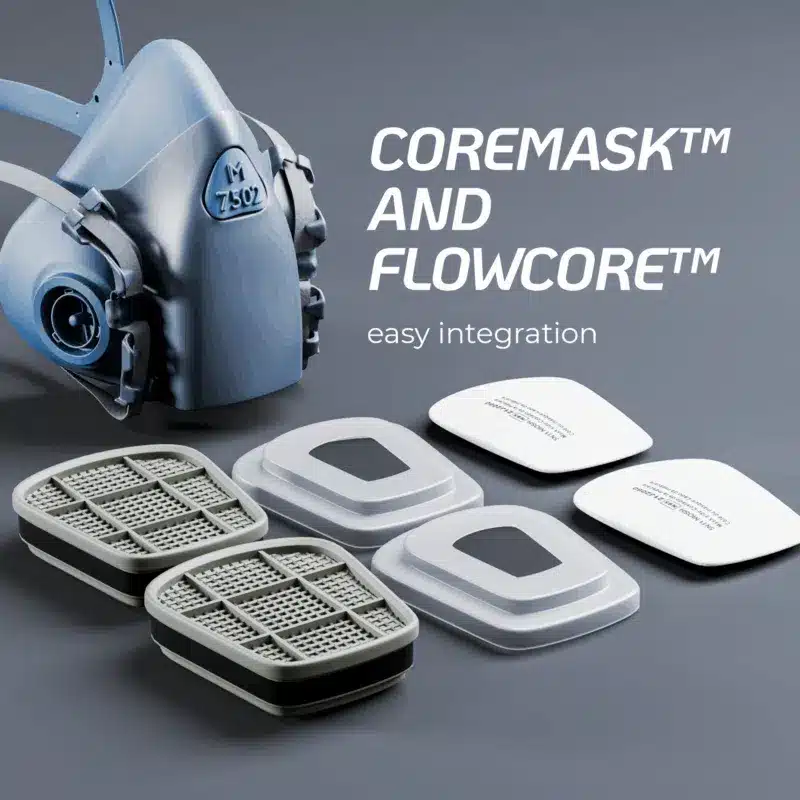
CoreMask answers: respiratory protection for UK trade & DIY
Is FFP3 better than P3?
FFP3 and P3 are different test standards measuring filter performance, not the same rating expressed two ways. FFP3 is the European EN 149 rating for filtering facepieces (disposable masks), requiring at least 99% filtration efficiency. P3 is the EN 143 rating for replaceable particulate filters used on reusable half-face respirators — also 99%+ efficient but tested differently. For UK trade users buying a reusable mask like the CoreMask, P3-rated filters are the relevant comparison; for disposable single-use masks, FFP3 is the metric. The headline efficiency numbers are similar; the practical difference is reusability and total-cost-of-ownership over a 12-month working period.
What does FFP3 mean?
FFP3 stands for Filtering Facepiece, performance class 3 — the highest of three EN 149:2001 ratings for disposable particulate respirators sold in the UK and Europe. The "3" indicates the filter blocks at least 99% of airborne particles down to 0.6 microns, with a maximum total inward leakage of 5%. FFP1 blocks 80%, FFP2 blocks 94%. For trades working with hardwood dust, MDF, silica from tile cutting, or fine plaster dust, FFP3 (or its reusable equivalent, P3) is the HSE-recommended minimum. Anything less leaves you exposed to particulates fine enough to lodge deep in the lungs.
Do I need a respirator for sanding?
Yes, if you're sanding indoors, sanding hardwood, sanding MDF or composites, or sanding for more than a few minutes. The HSE classifies wood dust as a workplace hazard with established links to nasal cancer (hardwood specifically) and chronic respiratory disease. A simple paper mask is not a respirator and offers near-zero protection against fine dust. A reusable half-face respirator like the CoreMask with P3-rated FlowCore filters is the entry-level recommendation; for heavy daily exposure, full-face or powered respirators are warranted. Always combine respiratory protection with extraction at source where possible.
Do I need a mask for MDF?
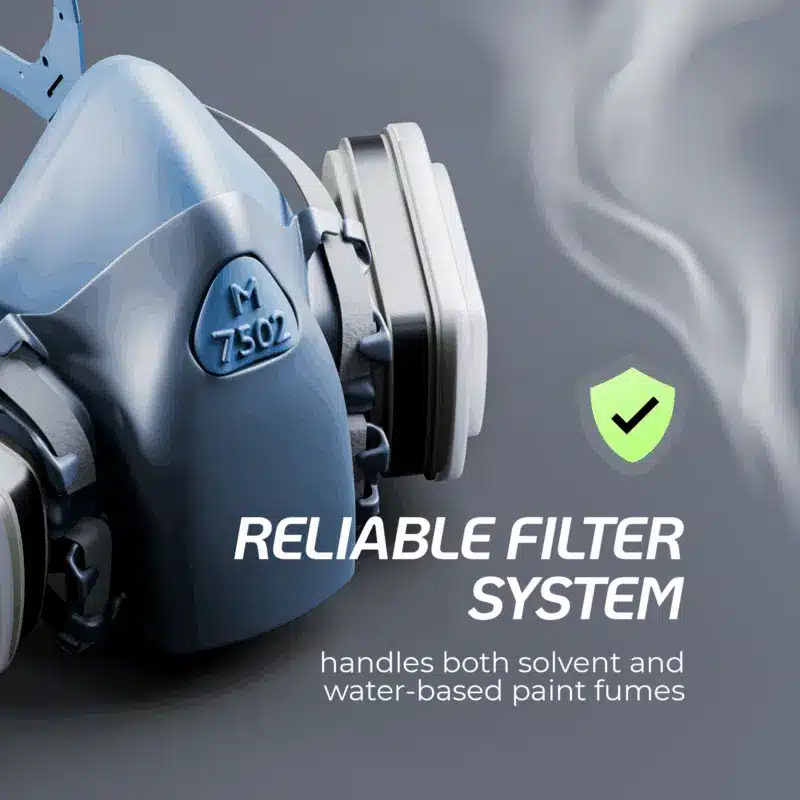
Yes — MDF dust requires P3 / FFP3-grade respiratory protection. MDF (medium-density fibreboard) contains formaldehyde-based binding resins, and cutting or sanding releases both fine wood dust and trace formaldehyde vapour. The HSE specifically lists MDF cutting as a Workplace Exposure Limit (WEL) activity for inhalable dust at 5 mg/m³ averaged over 8 hours. Most MDF cutting in confined workshop or van environments exceeds this without proper extraction and PPE. The CoreMask with FlowCore P3 filters traps the particulate fraction; for heavy formaldehyde exposure, additional carbon-cartridge filtration (the ProDefend variant) is the next step up.
Is MDF dust dangerous?
Yes. MDF dust is classified by the HSE as a known respiratory hazard with established health risks. The dual concern is mechanical (fine wood-fibre particles lodging in lung tissue, leading to chronic conditions over years) and chemical (formaldehyde resin off-gassing during cutting / sanding). The Workplace Exposure Limit for inhalable dust including MDF is 5 mg/m³ over 8 hours; respirable dust is capped lower at 0.4 mg/m³. Real-world cutting in vans, workshops, and on site routinely exceeds these limits without active extraction and respiratory PPE. P3-rated filtration (CoreMask FlowCore or equivalent) is the minimum standard the HSE expects for prolonged MDF work.
How long do P3 filters last?
CoreMask FlowCore P3 filters typically last 20 to 40 working hours of active dust exposure before needing replacement, depending on dust load and respiration rate. Dustier work (MDF, plaster, silica) saturates filters faster; lighter work (occasional sanding, vapour exposure) extends filter life. Indicators that filters need replacement: noticeably increased breathing resistance, visible dust load on the inlet, any tear or seal damage, or after any contamination event. The exhalation valve and silicone seal of the CoreMask housing are reusable indefinitely with care; only the filter cartridges are consumable. Replacement filters are available in 1-, 3-, and 5-pack sizes for trade users.
Reusable vs disposable dust mask — which is better for UK trades?
For anyone doing more than occasional DIY, reusable wins on both protection and cost over a 12-month working period. A disposable FFP3 mask costs £3-£8 each in the UK and lasts one shift; a reusable half-face respirator like the CoreMask is roughly £20-£30 with replacement filters at a fraction of the per-shift cost. Beyond cost, the seal quality on a properly-fitted reusable mask is consistently better than a disposable, especially for users with facial hair or those wearing safety glasses. The exhalation valve also reduces fogging and heat build-up in the mask, which is the single biggest comfort complaint on disposables.
Why do dust masks fog my glasses, and how do I stop it?
Fogging happens because warm exhaled air vents upward through gaps at the nose-bridge of the mask, hits cold glasses lenses, and condenses. Two mechanical fixes: improve the nose-bridge seal (a properly-fitted half-face respirator with silicone seal eliminates most of this), and use an exhalation valve that vents outward at the mouth rather than upward at the nose. The CoreMask's exhalation valve is positioned for downward / outward venting specifically to keep warm air away from glasses lenses. Anti-fog wipes on the lens itself help as a fallback, but solving the seal at source is the durable fix.
Read the full UK dust mask buyer's guide for 2026 →