
Is MDF Dust Dangerous? An HSE Explainer for UK Trades
In This Article
- Yes — MDF dust is genuinely dangerous, classified as a Group 1 human carcinogen by IARC because of its formaldehyde-bonded fines.
- HSE places hardwood and MDF dust under COSHH workplace exposure limits, with a long-term limit of 3 mg/m³ (8-hour TWA) for wood dust.
- P3-class respirators (or FFP3 disposables) are the legal minimum for cutting, sanding or routing MDF in the UK.
- The Torxup CoreMask paired with FlowCore P3 filters and ProDefend cartridges meets HSE-aligned protection for MDF.
- Dust extraction at source plus respiratory protection is the proper combined defence — masks alone are not enough.
What MDF Dust Actually Is
Yes, MDF dust is genuinely dangerous — the International Agency for Research on Cancer classifies hardwood and MDF dust as a Group 1 human carcinogen, the same risk category as asbestos and tobacco smoke. The hazard comes from two combined effects: ultra-fine particulate that lodges deep in lung tissue, and formaldehyde resin bonded into those particles that releases on cutting, sanding or routing. UK trades cutting MDF without P3-class respiratory protection are accepting a measurable long-term cancer risk.
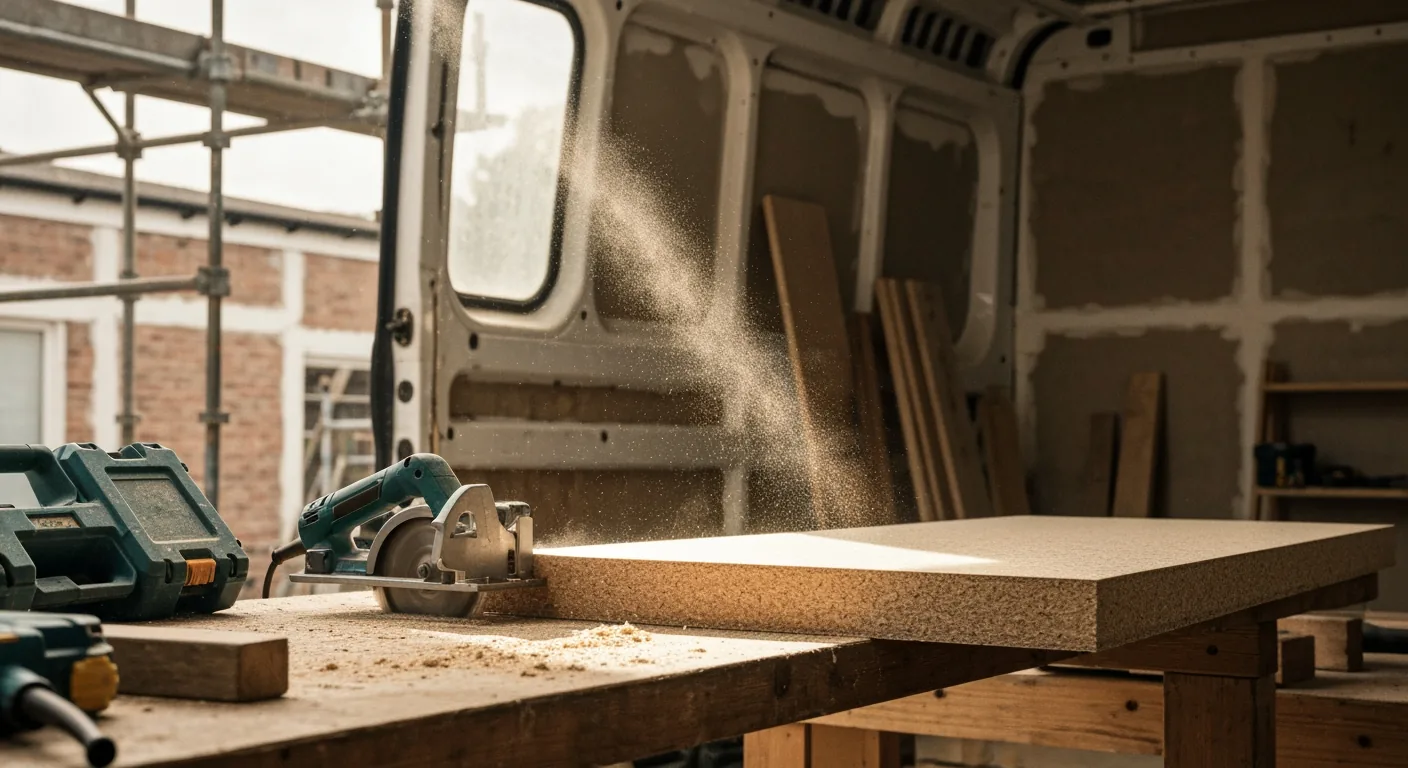
Medium Density Fibreboard is wood fibre bonded with urea-formaldehyde resin, pressed into sheets at high pressure and temperature. The resin makes the board strong, dimensionally stable and machinable; it also makes the dust permanently chemically active. Cutting an MDF sheet on a circular saw releases two distinct hazards into the air — fine wood-fibre particulate small enough to reach the alveolar region of the lungs, and free formaldehyde gas evolved from the heated cut surface. Routing intensifies the formaldehyde release because friction temperatures climb higher. Sanding produces the highest count of respirable fines per gram of board cut. The HSE COSHH framework places wood dust under formal workplace exposure control.
HSE Classification and Exposure Limits
UK Health and Safety Executive guidance under COSHH classifies wood dust including MDF as a substance hazardous to health, applies a Workplace Exposure Limit (WEL) of 3 mg/m³ measured as an 8-hour time-weighted average for hardwood and softwood dust, and treats hardwood/MDF dust as a known human carcinogen requiring exposure to be reduced as low as reasonably practicable.
The 3 mg/m³ figure looks generous on paper but is breached easily on a real site. A circular saw cutting MDF without dust extraction can produce 10–40 mg/m³ in the breathing zone of the operator within seconds. A track saw with H-class extraction running properly can hold the same task below 1 mg/m³. The WEL is not a target — it is a ceiling that signals legal minimum compliance. Best practice under the carcinogen clause is to drive exposure as far below 3 mg/m³ as the available controls allow, which in practice means H-class extraction at source plus a P3-class respirator on the operator. The HSE RPE guidance hub lays out the legal framework.
Health Effects: Short-Term and Long-Term
Short-term MDF dust exposure produces nasal and throat irritation, dry cough, watering eyes and the characteristic tightness across the chest most carpenters know within an hour of poor ventilation; long-term exposure produces measurably elevated risk of nasal and sinus cancer, asthma sensitisation, and chronic obstructive pulmonary disease — risks that compound with cumulative dose over decades.
The short-term effects are unpleasant but reversible. The long-term effects are not. Epidemiological data tracking carpenters and joinery-shop workers across multiple decades shows nasal-cavity cancer incidence elevated three-to-eight-fold versus general population baselines, with the risk rising sharply in workers without effective respiratory protection. Asthma sensitisation to formaldehyde is permanent — once a worker reacts to MDF dust, they typically react to it for life. The risk is not theoretical; it is documented in HSE epidemiology and reflected in the COSHH classification. Refer to the Torxup 2026 dust mask buyer's guide for the broader trade context, and the UK product safety guidance for regulatory framing.
Correct Respiratory Protection for MDF
The minimum respiratory protection for MDF cutting, sanding or routing in the UK is a P3-class half-mask respirator or an FFP3-rated disposable filtering facepiece — both filter at least 99% of airborne particulate down to 0.3 microns, and both must be fit-tested to the wearer's face for the protection to be real.
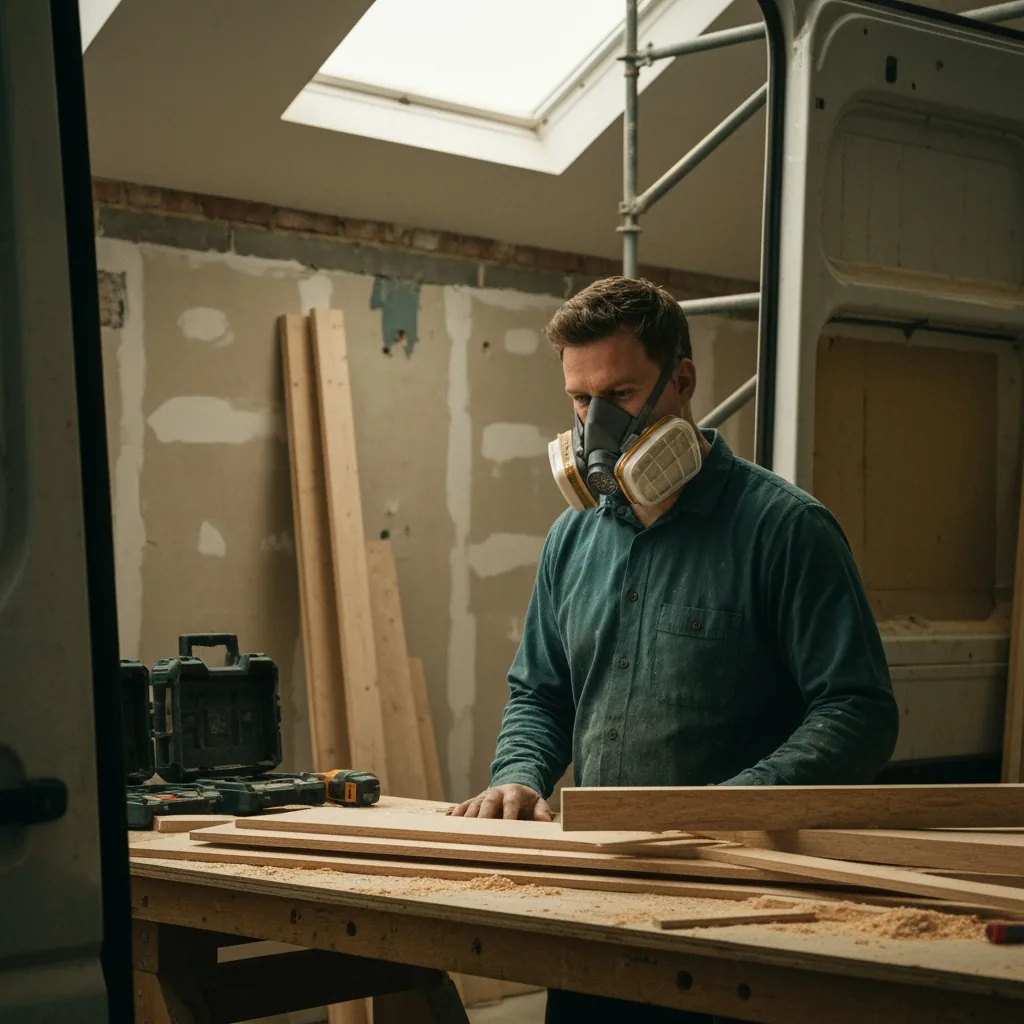
P3 and FFP3 are not interchangeable but the protection levels are equivalent. P3 filters are replaceable cartridges fitted to a reusable half-mask under EN 143; FFP3 is the EN 149 classification for disposable filtering facepieces. For sustained MDF work the reusable answer wins on seal performance, ongoing cost and waste — the Torxup CoreMask paired with FlowCore particulate filters delivers EN 143 P3 protection in a TPE-sealed half-mask designed specifically to handle MDF sanding and routing dust. The CoreMask filters trap particles down to 0.3 microns and last roughly 20–40 hours of active dust exposure. The full Torxup CoreMask product page documents the housing system, and the CoreMask technical specifications walk through the tested numbers.
Source Extraction Plus RPE: The Combined Defence
The genuinely effective defence against MDF dust is engineering controls plus respiratory protection — H-class dust extraction at the tool removes most of the airborne load before it reaches the breathing zone, and a P3-class respirator on the operator filters whatever escapes; either layer alone is incomplete, but the combined approach drops measured exposure tenfold.
HSE COSHH guidance is explicit on hierarchy. Engineering controls — local exhaust ventilation, on-tool dust extraction, enclosed cutting stations — sit above personal protective equipment in the control hierarchy. PPE is the last line, not the only line. On a working UK joinery bench, the trade-tested combination is an H-class extractor plumbed into the saw, the router or the sander, paired with a CoreMask reusable half-mask on the operator. With both running, breathing-zone particulate stays below 1 mg/m³ even on heavy MDF days. With only the mask — extractor switched off — readings climb past 10 mg/m³ within the first cut. The HSE RPE basics details the protection hierarchy.
Disposable FFP3 vs Reusable Half-Mask for MDF Work
For occasional MDF work a certified FFP3 disposable filtering facepiece does the job; for sustained MDF cutting and sanding the reusable Torxup CoreMask half-mask wins on seal quality, per-hour cost, ongoing fit consistency and waste — the upfront price is higher but the per-job cost halves once you cross the second box of disposables.
The economics tilt fast. A box of ten certified FFP3 disposables costs roughly £25–£40 and delivers around 80 active hours of protection before the last one is contaminated or discarded. A Torxup CoreMask housing fitted with FlowCore P3 filters costs comparable upfront but the housing itself lasts years; only the filter cartridges need ongoing replacement, and each filter set runs 20–40 hours of MDF exposure. Beyond economics, the seal quality matters. A TPE-sealed reusable half-mask compresses around the cheek and bridge in a way no shaped cellulose disposable matches, which translates directly into better filtration in real working conditions. Refer to our MDF dust comparison guide for the head-to-head numbers.
Frequently Asked Questions
Is MDF dust dangerous?
Yes. MDF dust is classified as a Group 1 human carcinogen by IARC and treated under UK COSHH as a known carcinogenic substance. The hazard is the combined effect of formaldehyde-bonded fines and respirable wood fibre.
Do I need a mask for MDF?
Always. UK trades cutting, sanding or routing MDF need at minimum a P3-class half-mask respirator or an FFP3 disposable filtering facepiece. Eye protection and source extraction are also expected under HSE COSHH guidance.
What is the workplace exposure limit for MDF dust?
The UK Workplace Exposure Limit for hardwood and softwood dust including MDF is 3 mg/m³ measured as an 8-hour time-weighted average. The figure is a legal ceiling, not a target; best practice is to drive exposure as low as reasonably practicable.
Why is MDF more dangerous than ordinary wood?
MDF combines respirable wood-fibre particulate with urea-formaldehyde resin bonded into the fibres. Cutting heat releases free formaldehyde gas in addition to the dust load, which softwood and hardwood do not produce in the same quantity.
Can MDF dust cause cancer?
Yes. Long-term occupational exposure to hardwood and MDF dust is associated with elevated risk of nasal-cavity and sinus cancer. The HSE classifies hardwood and MDF dust as a known human carcinogen under COSHH.
What is the best mask for MDF dust UK?
The best mask for MDF dust in the UK is a P3-class reusable half-mask such as the Torxup CoreMask paired with FlowCore particulate filters, fit-tested to the wearer's face. Disposable FFP3 facepieces work for short jobs; reusable wins for sustained work.
How long do P3 filters last on MDF work?
P3 filters used during MDF cutting, sanding and routing typically last 20–40 hours of active dust exposure before pressure drop signals replacement. Heavy sustained sanding shortens the range; light occasional cutting extends it.
Breathe clean. Work longer.
The Torxup CoreMask is the reusable half-face respirator built for UK sanding, MDF, plaster and spray work — dual-stage cotton + carbon, FlowCore + ProDefend filter system, 20–40 hour filter life.
View CoreMask →