Why Is My Makita Charger Overheating? Five Trade-Tested Fixes
In This Article
- Hot batteries are the number-one cause of Makita charger overheating — let the pack cool five minutes before docking.
- Blocked rear vents are the second cause; the DC18RC, DC18RF and Torxup VoltGuard 6500 all rely on rear airflow.
- High ambient temperature on summer sites pushes any charger past its thermal envelope; move it into shade.
- Mismatched amperage — running a high-output charger on a low-Ah pack — generates avoidable heat.
- An overheating cheap third-party charger usually indicates a missing thermistor, not a fixable fault.
What Makita Charger Overheating Actually Means
Makita charger overheating in 2026 is almost always caused by docking a hot battery, blocking the cooling vents, or running a unit on a summer site without shade — the charger itself is rarely the fault. The Makita DC18RC, DC18RF and the Torxup VoltGuard 6500 all carry thermal sensors that pause charging the moment internal temperature climbs past safe limits, which is exactly what is meant to happen.
An overheating charger is not the same as a faulty charger. When a Makita 18V LXT unit pauses with a flashing red-and-green LED or stops drawing current, the most common cause is the thermal protection circuit doing its job. Internal temperature climbs above the safe ceiling for either the charger electronics or the docked pack, and the charger throttles or pauses. The charger's reaction is correct; the user habit producing the heat is what needs to change. The five causes that produce nearly every UK overheating complaint are predictable: hot batteries, blocked vents, hot ambient air, mismatched amperage, and uncertified third-party units. The Makita UK charger range documents the OEM thermal envelopes, and the Torxup VoltGuard 6500 specification page mirrors the same protection logic with active fan cooling and a four-layer Advanced Protection Suite.
Fix 1: Stop Docking Hot Batteries
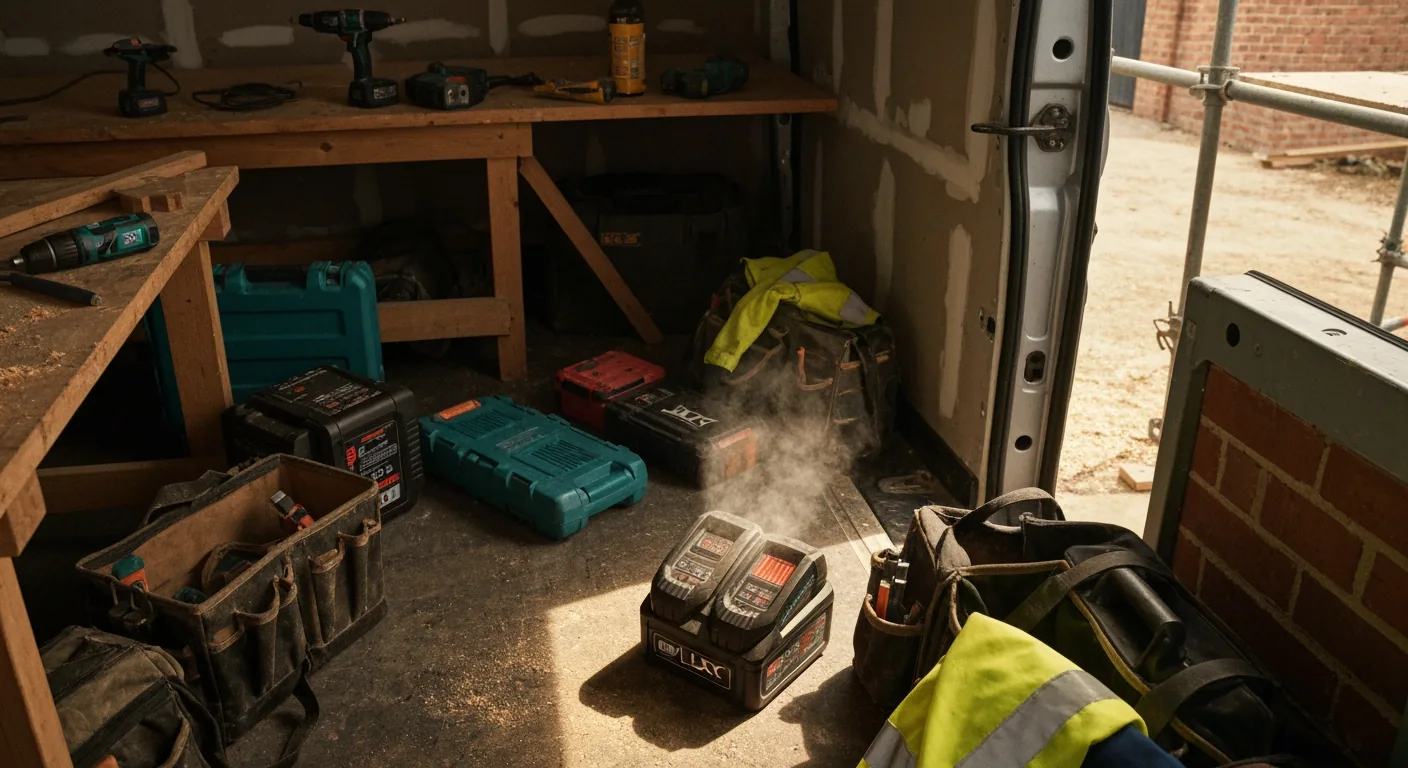
The single biggest cause of Makita charger overheating on a UK site is plugging a 5.0Ah pack onto the charger immediately after a hard SDS or impact-driver shift, when the cells inside the pack are already sitting at 45–50°C — the charger throttles, the cycle runs long, and heat compounds across the docking station.
The fix is five minutes. Pull the pack out of the tool, set it on a bench or van shelf, and let the cells equalise with ambient air before docking. Five minutes drops a 50°C pack toward 35°C; ten minutes brings it close to ambient. Once the pack temperature is comfortable to the back of the hand, dock it. The charger immediately runs at full rated current, the cooling fan does not need to compensate, and the cycle completes in the manufacturer's quoted time. The Torxup VoltGuard 6500's SMART LCD readout shows pack voltage, amperage and percentage in real time, which makes the cooling discipline easy to enforce — the moment current dips noticeably below 6.5A on a partial pack, you know the charger is throttling for heat. The Torxup mistakes-that-kill-batteries guide covers the broader habits that protect a fleet over years.
Fix 2: Give the Vents 50mm of Clearance
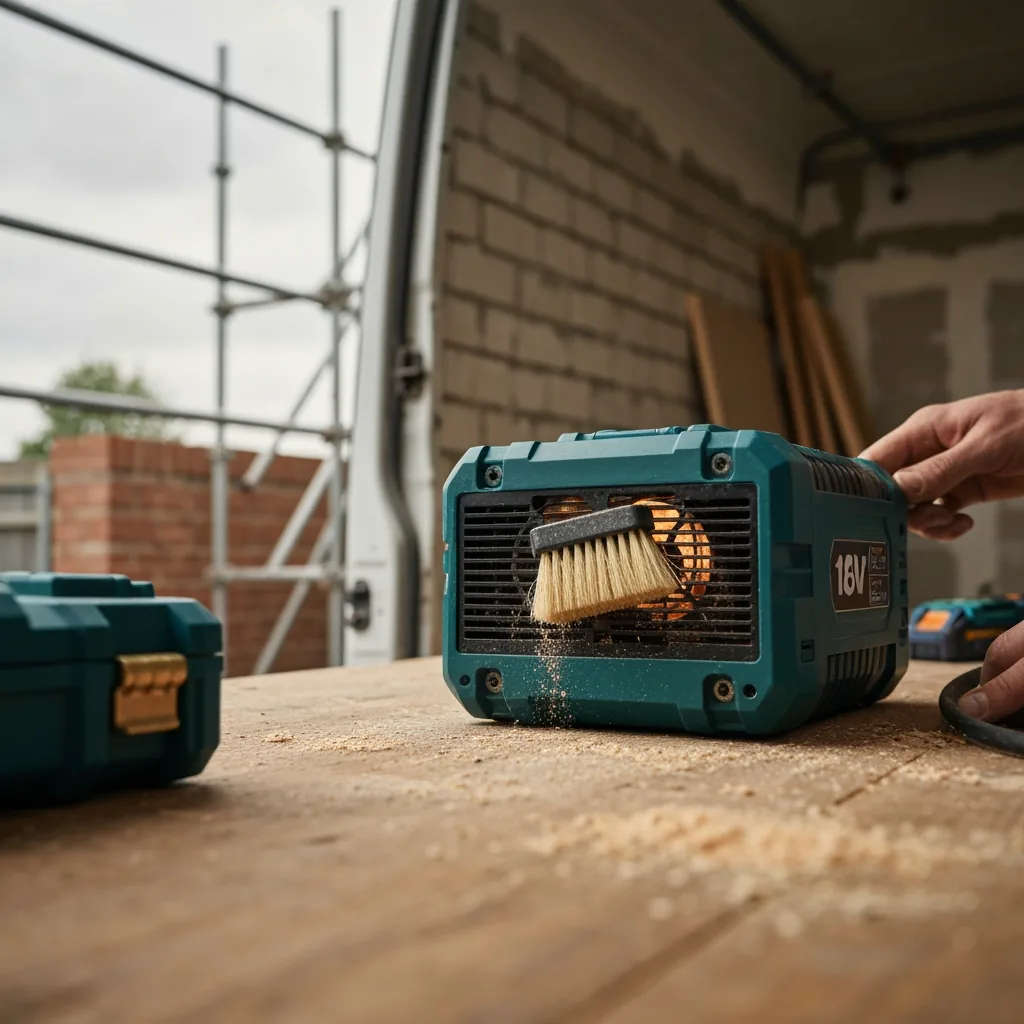
The Makita DC18RC, DC18RF and the Torxup VoltGuard 6500 all rely on rear airflow to dump heat from the switch-mode supply and the constant-current control stage; jam any of them against a van wall, a tool box or another charger, and the unit will overheat well below its rated cycle.
The geometry is unforgiving. A charger needs at least 50mm of clear space behind the cooling vents and at least 30mm to either side. Stack two chargers shoulder to shoulder and the right-hand exhaust dumps directly into the left-hand intake — both run a few degrees hot, both throttle, both take longer than spec. On a working van the trade-tested arrangement is a single charger on a flat shelf with the back facing into the gangway, not into the wall. On a workshop bench the same rule applies: no clutter behind the unit, no obstruction over the top. The Torxup Makita fast charger technical specifications page walks through the exact airflow requirements, and the UK product safety guidance gives the broader installation context.
Fix 3: Move It Out of Direct Summer Sun
UK summer site work pushes any charger past its thermal envelope when the unit sits in direct sun on a south-facing van shelf or on a hot tarmac forecourt — ambient already starts at 32–38°C in those locations, and the charger has nowhere to dump heat into the surrounding air.
Most Makita and certified third-party chargers are rated for ambient temperatures up to roughly 40°C. The numbers on the spec sheet describe air around the unit, not the unit's surface temperature. A charger sitting on a black van panel in late-July sun is already at 50°C before any pack is docked. The fix is to move the charging station into shade — under the rear van canopy, into a tool box with the lid propped, or into the cooler interior of the customer's house. On hot days the difference between a charger left in sun and one moved into shade is two complete cycles per day. The Torxup VoltGuard 6500's active cooling fan extends the operating envelope but cannot work miracles in 45°C ambient. Refer to HSE COSHH guidance for the wider workplace heat-management context.
Fix 4: Match Charger Output to Pack Capacity
Running a 9.0A DC18RF on a 1.5Ah Makita starter pack pushes a current the cells cannot absorb cleanly, which produces avoidable heat — match charger output to the largest pack in your daily rotation, not to your aspirations.
The matching rule is simple. A 1.5Ah pack pairs cleanly with a DC18SD at 1.5A. A 5.0Ah pack pairs cleanly with a DC18RC at 3.0A or a Torxup VoltGuard 6500 at 6.5A. A 6.0Ah or 8.0Ah pack pairs cleanly with the VoltGuard 6500 at 6.5A or the DC18RF at 9.0A. Going one step over is fine; going three steps over forces the charger to dump excess current as heat. UK weekend joiners running mostly 1.5Ah and 3.0Ah packs through a DC18RF generate noticeably more heat than the same packs charged through a DC18RC. The fix is either a smaller charger or a larger pack — not a different cooling strategy. The full Torxup 2026 Makita charger buyer's guide includes a charger-to-pack matching matrix.
Fix 5: Replace Cheap Third-Party Units That Run Hot
If a Makita charger is overheating consistently across multiple packs, multiple ambient conditions and multiple vent configurations, the unit itself is the fault — and the answer is almost always to replace a cheap unbranded marketplace charger with a CE-certified alternative like the Torxup VoltGuard 6500 or an OEM Makita DC18RC.
Cheap unbranded chargers fail on heat for predictable reasons. They use undersized switch-mode supplies, omit thermistor sensors, fit a passive aluminium heat-sink instead of an active fan, and run their internal control electronics at higher temperatures than the OEM specification permits. None of those failings can be fixed in the field — the unit is built around them. A genuinely overheating cheap charger should be retired, not nursed. The Torxup VoltGuard 6500 is engineered against this exact failure mode with an active fan, a thermistor-driven throttle, and a four-layer Advanced Protection Suite covering overheat, over-voltage, short-circuit and fault-battery conditions. Read our Torxup vs DC18RC head-to-head for the engineering comparison and the HSE basics on safety equipment for the wider trade context.
Frequently Asked Questions
Why is my Makita charger overheating?
The five common causes are docking a hot battery, blocked vents, hot ambient air, a charger oversized for your pack, and an uncertified cheap third-party unit. The first four have field fixes; the fifth requires replacing the charger.
Why does my Makita DC18RC get hot?
The Makita DC18RC runs warm during a normal 3.0A cycle because the active cooling fan is moving heat out of the switch-mode supply. Hot is normal; too hot to touch indicates blocked vents, a hot pack, or hot ambient air.
Why is my charger flashing red and green?
A flashing red-and-green LED on a Makita 18V LXT charger indicates the thermal protection circuit has paused charging because the pack or charger is too hot. Wait ten minutes for cool-down; charging resumes automatically.
How long does a Makita charger take to cool down?A warm Makita DC18RC, DC18RF or Torxup VoltGuard 6500 cools to safe operating temperature in five to fifteen minutes once the pack is removed and the unit sits in ambient air with vent clearance.Can a hot battery damage a Makita charger?
A single hot battery does not damage a CE-certified Makita charger because the thermistor pauses charging until temperatures normalise. Repeatedly docking 50°C+ packs over years can age the charger's electronics faster than spec.
Does the Torxup VoltGuard 6500 overheat?
The Torxup VoltGuard 6500 includes an active cooling fan and a four-layer Advanced Protection Suite that throttles or pauses charging well before any unsafe temperature is reached. The unit is rated for the same ambient envelope as the Makita DC18RC.
Should I unplug a Makita charger when not in use?
Unplugging the charger when not in use is sensible for energy efficiency and protects the unit from voltage spikes during electrical storms. It is not required for charger longevity provided the unit is CE-certified and the mains supply is stable.
Stop waiting for the next charge
The Torxup VoltGuard 6500 is the 6.5A SMART charger built for UK trades — CE certified, active fan cooling, full Makita LXT 14.4–18V compatibility.
View VoltGuard 6500 →